The Follow-Up Is the TripHow Advisors Turn One Booking Into a Lasting Relationship
At a Glance
- The missed moment: Most advisors go quiet right when clients are most likely to refer
- Timing: Reach out within a week of return — while the trip is still vivid
- Make it personal: Reference something specific from their itinerary, not a generic "how was it?"
- Ask for the referral now: During the follow-up, not weeks later in a separate request
- The payoff: One thoughtful follow-up is what separates a one-time booking from a lifetime client
Here's the moment most travel advisors lose the relationship: the client lands home, unpacks, posts a few photos, and the advisor sends a polite "How was your trip?" email two weeks later. By then the client has already moved on. The glow has faded, the specifics have blurred, and the advisor who could have captured all that goodwill is just another name in the inbox.
The advisors who keep clients for decades understand something the rest miss: the trip doesn't end when the client lands home. That's when the relationship begins. The follow-up isn't an administrative closing of the file — it's the opening of the next one.
Why the post-trip window is the most valuable hour you'll spend
In the first week after a client returns, they are more emotionally engaged with their trip than they will ever be again. They're telling friends about it. They're scrolling through photos. They're already half-planning a return. This is the window when a single thoughtful touch can convert a satisfied customer into a lifelong advocate — and when silence can quietly end the relationship without anyone noticing.
Yet this is exactly when most advisors go quiet. The booking is done, the commission is earned, the file is closed. The energy that went into winning the trip evaporates the moment it's over. The advisors who flip that script — who pour energy into the after — are the ones with books of business built on referrals, not cold leads.
"The trip is the product. The follow-up is the relationship. Advisors who confuse the two close the file when the client lands — and wonder why the phone stops ringing."
— Well TRVL'd Editorial Team, after a decade of advisor retention interviews
The follow-up that actually works (and the one that doesn't)
The follow-up that doesn't work is the one you can automate: a generic survey link, a "we hope you enjoyed your trip" template, a request for a Google review. Clients read these as what they are — a closing transaction, not a relationship. They get deleted, ignored, and forgotten.
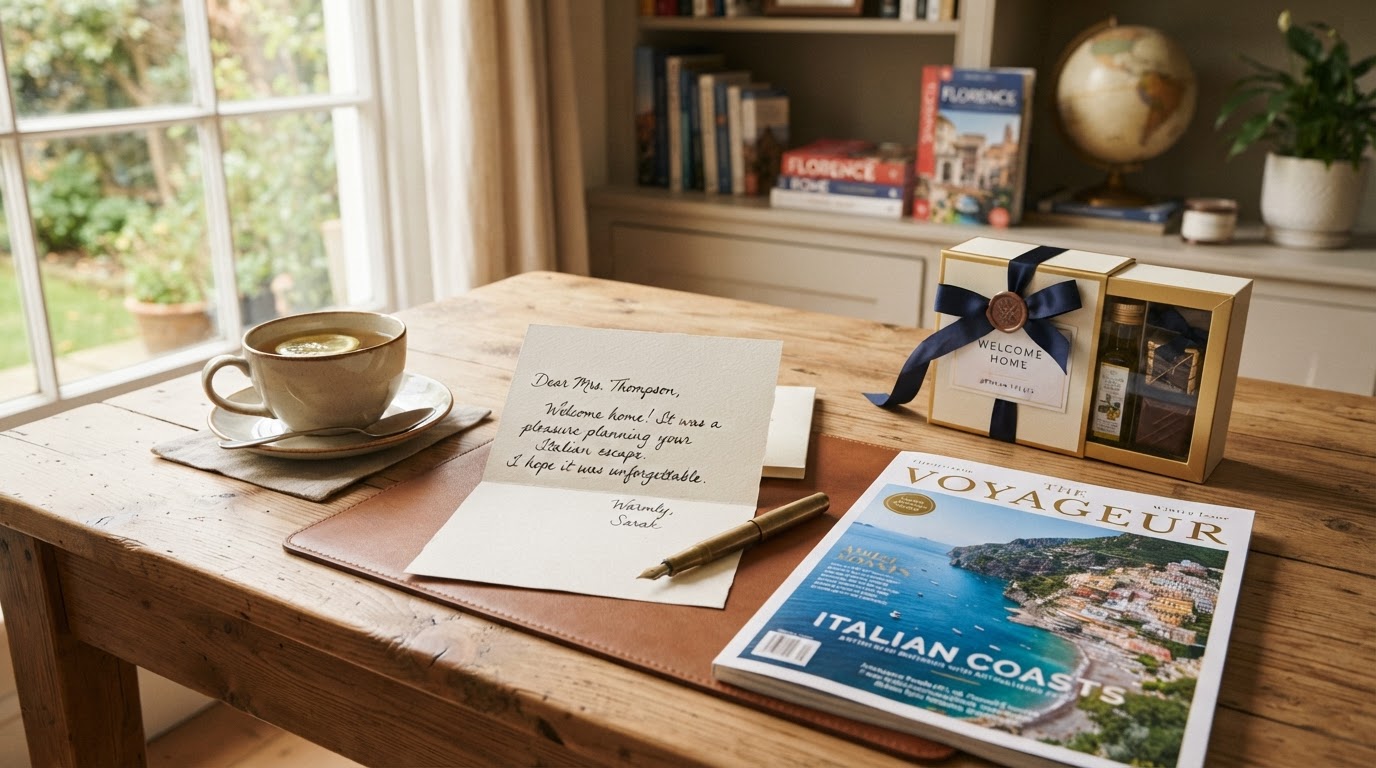
The follow-up that works is the opposite. It's specific, personal, and arrives while the trip is still vivid. A hand-written note that references the private dinner you arranged in Florence. A short call to hear, in their words, what the trip meant. A printed photo from the hotel you booked, or a client magazine featuring their destination. The bar is low because so few advisors do it — which is exactly why it lands.
The transactional follow-up vs. the relational one
| Element | Transactional (closes the file) | Relational (opens the next one) |
|---|---|---|
| Timing | Weeks later, batched | Within a week, while it's vivid |
| Format | Email survey, template | Note, call, or printed touch |
| Specificity | Generic "how was it?" | References a real moment |
| Asks for | A review, a rating | A conversation, a referral |
| Result | Closed file, cold lead next time | Warm relationship, repeat booking |
Ask for the referral now — not later
Most advisors wait weeks or months to ask for a referral, by which point the client's enthusiasm has cooled and the ask feels like a separate, awkward transaction. The right moment is during the follow-up, while the client is still raving. Frame it as an introduction, not a favor: "If a friend is planning something similar, I'd love to help them the same way." A client who just returned from a flawless trip is the most credible, willing marketer you will ever have — but only if you ask while the glow is still on.
This is also the moment to plant the seed of the next trip without selling. Mention that the destination they loved is spectacular in a different season. Note their anniversary is coming up. Drop a branded magazine in the mail a few weeks later with a story about a place they mentioned wanting to visit. None of this asks for a booking. All of it keeps you in the room when the next booking impulse arrives — which is exactly what our guide on staying top of mind between trips is built around.
The follow-up is the trip
The advisors with the longest client lists didn't get there by being the cheapest or the most available. They got there by being the ones who showed up after the trip, not just before it. The follow-up is where a transaction becomes a relationship — and where a relationship becomes a referral engine that fills the calendar for years. If you want the full picture of the advisor's role, start with what a travel advisor actually does — and for the marketing side, see how advisors market themselves in 2026.
Last updated: August 9, 2026. This article is reviewed regularly to keep follow-up practices and referral data current.
Read more from Well TRVL'd: staying top of mind between trips · what a travel advisor does · custom client magazines