How to Stay Top of Mind With Travel ClientsBetween Trips
At a Glance
- The real risk: Advisors lose clients to silence, not to competitors
- Healthy cadence: One meaningful touch roughly every quarter, plus milestone moments
- Print advantage: A magazine lives in the client's home for weeks, not seconds
- Email role: Fast and timely, but low retention on its own
- Bottom line: Value-first contact between trips is what turns one booking into a lifetime of referrals
Here's a quiet truth most travel advisors learn the hard way: the booking isn't the relationship. The relationship is what happens between the bookings — the months when a client isn't traveling, isn't planning, and isn't thinking about you at all. That gap is where most advisors lose clients. Not to a competitor with a better pitch, but to silence. The next time that client thinks about travel, they default to booking online or asking a friend — because you stopped existing in their world.
Staying top of mind isn't about being loud. It's about being present with something worth their attention. Here's how the advisors who keep clients for decades actually do it.
Why clients forget you (and it's not personal)
A client who had a flawless two-week trip with you will still forget you within a year if they don't hear from you. That's not ingratitude — it's just how memory works. Travel is episodic. People think about it intensely for a few weeks, then file it away. If your name isn't attached to something in their life during the quiet months, you get filed away too.
The advisors who break this cycle understand one thing: you don't stay top of mind by reminding clients you exist. You stay top of mind by giving them a reason to be glad you do.
"The advisor who mails a magazine twice a year is the advisor who gets the call for the anniversary trip. The advisor who goes quiet is the one who finds out the client booked somewhere else from a friend."
— Well TRVL'd Editorial Team, after a decade of advisor retention interviews
The print advantage: a reason to reach out that isn't a sale
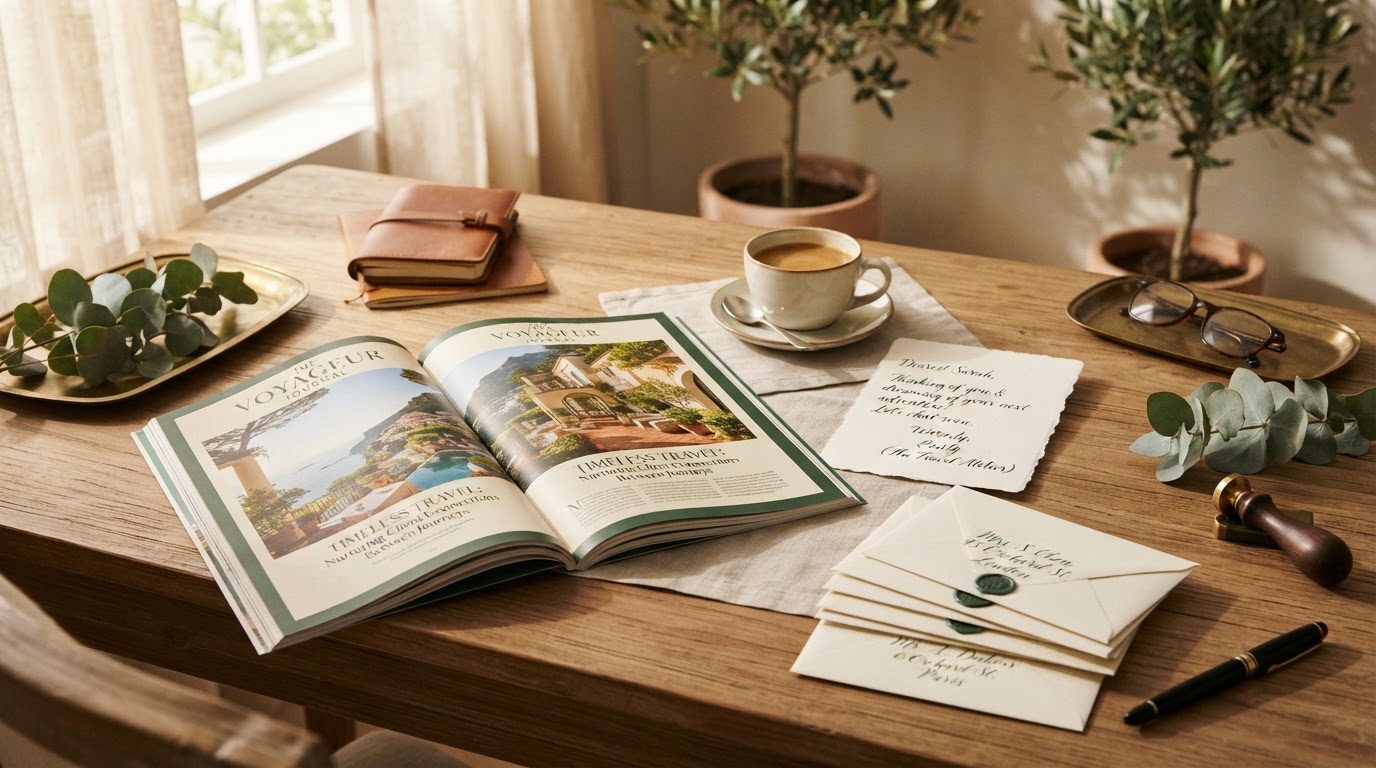
Email is fast, cheap, and essential — but it's also forgotten in minutes. The average promotional email is read or deleted within seconds, and open rates for marketing emails sit well below 25%. Print is the opposite. A mailed magazine is rare enough to feel like a gift. It gets read at a slower pace, on a couch rather than a phone, and it physically lives in the client's home for weeks. Some clients leave it on a coffee table where guests pick it up — which means your brand is now in front of their friends, too.
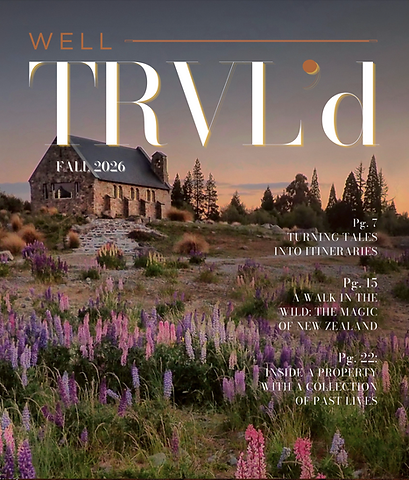
This is why a custom client magazine is one of the highest-retention tools an advisor can use. It gives you a natural, high-quality reason to reach out two to four times a year without ever asking for a booking. The magazine does the selling for you, quietly, by reminding the client what you do and who you are — every time they walk past it.
Print vs. email for staying in touch
| Factor | Print (magazine / note) | |
|---|---|---|
| Cost per touch | Very low | Moderate, but high impact |
| Time in client's life | Seconds to minutes | Days to weeks |
| Stands out? | No — inbox is crowded | Yes — print is now rare |
| Shareable with friends | Rarely forwarded | Often left out for guests |
| Best for | Timely updates, quick check-ins | Quarterly presence, milestone moments |
A cadence that works: the quarterly rhythm
You don't need to contact clients constantly — you need to contact them consistently. A healthy rhythm for most advisors looks like this:
- Quarterly: One substantial, value-first touch — a printed magazine, a curated destination guide, or a thoughtful email with real recommendations (not a promotion).
- Milestones: A hand-written note or quick message on a client's birthday, anniversary, or a destination they love hitting the news. These feel personal because they are.
- Timely: When something genuinely useful happens — a new direct route, a visa change, a deal worth knowing about — send a short, specific note. Not a blast. A note.
The common thread is that none of these asks for a booking. They all give something. That's what keeps them from feeling like marketing — and what keeps you from being tuned out.
The hand-written note still wins
In a world of automated everything, a hand-written note is almost shockingly effective. It takes five minutes, costs a stamp, and is remembered for years. Advisors who send a genuine thank-you note after a trip — not an email, a note — report dramatically higher repeat-booking and referral rates. The bar is low because so few people do it, which is exactly why it works.
You don't have to choose between print and digital — the strongest advisors use both, for different jobs. A branded magazine handles the quarterly presence; email handles the timely updates; a hand-written note handles the moments that matter. Together they make sure that when travel comes up in a client's life, your name is the first one they reach for. If you want the deeper playbook on the advisor's role itself, start with our guide on what a travel advisor actually does — and for the marketing side, see how advisors market themselves in 2026.
Last updated: August 6, 2026. This article is reviewed regularly to keep retention practices and channel data current.
Read more from Well TRVL'd: what a travel advisor does · advisor vs. agent · custom client magazines